Selected work · 2024 - Present

Research

Multimodal models for spatial omics, from tissue morphology to molecular measurement. Current projects focus on virtual spatial proteomics, super-resolution spatial omics, cancer classification, and high-sensitivity spatial RNA sequencing.
01

Jan 2026 - Present

Spatial Proteomics

AI-driven virtual spatial proteomics via spatial transcriptomics and multimodal tissue imaging

Xiamen University · Tan Kah Kee Innovation Laboratory

Search and read the ProCLIP manuscript →

Question

Can missing protein channels be inferred from spatial transcriptomic profiles and tissue morphology?

My contribution

Developing multimodal generative models that integrate ISS, H&E histology, and imaging mass cytometry.

Status

Ongoing research with Prof. Mengsha Tong and Prof. Chaoyong Yang.

Key direction

Virtual spatial proteomic reconstruction for heterogeneity and cell-cell interaction analysis.
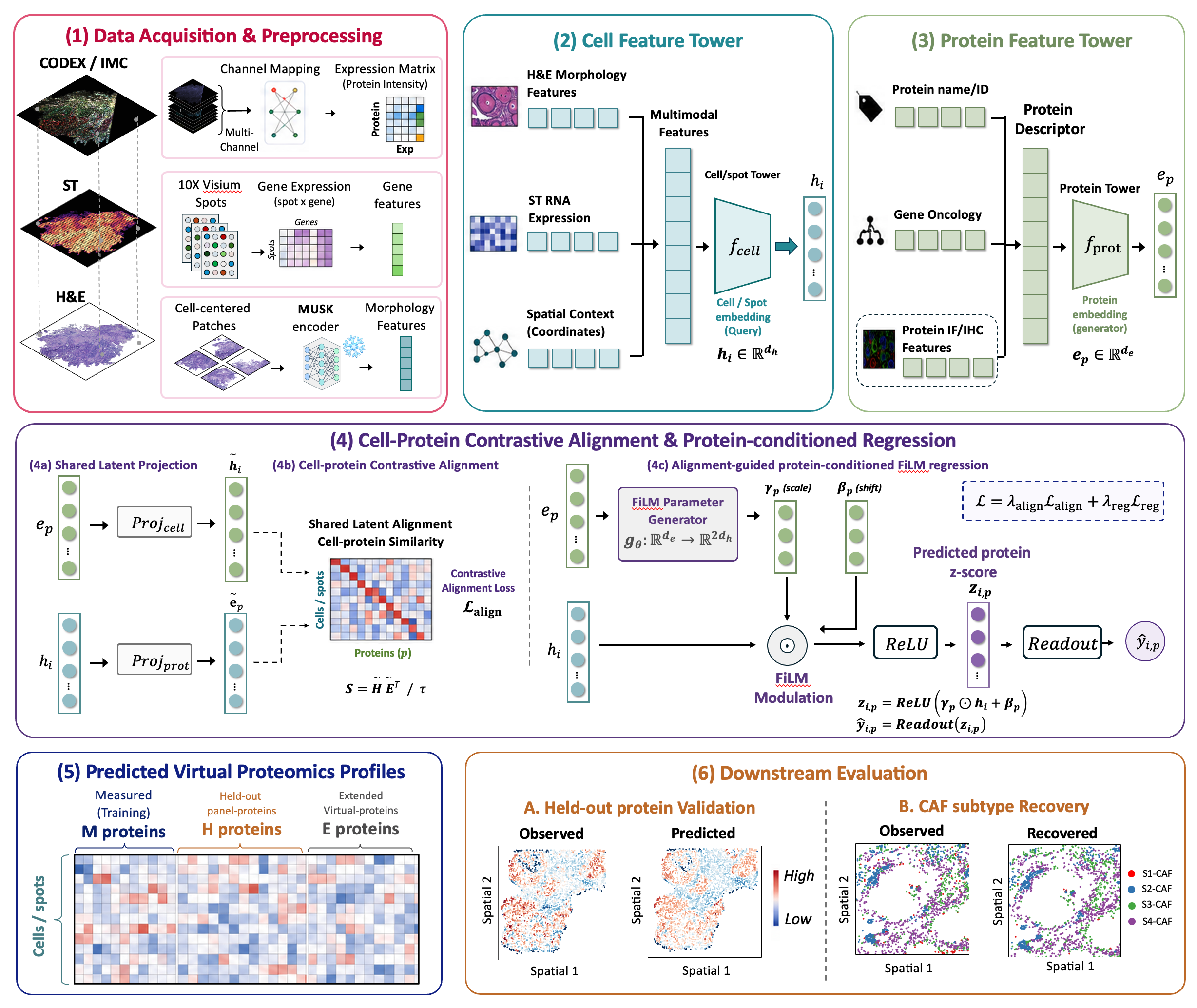
Virtual spatial proteomics workflow
Evidence: multimodal spatial foundation model workflow.
02

Jul 2025 - Present

Spatial Omics

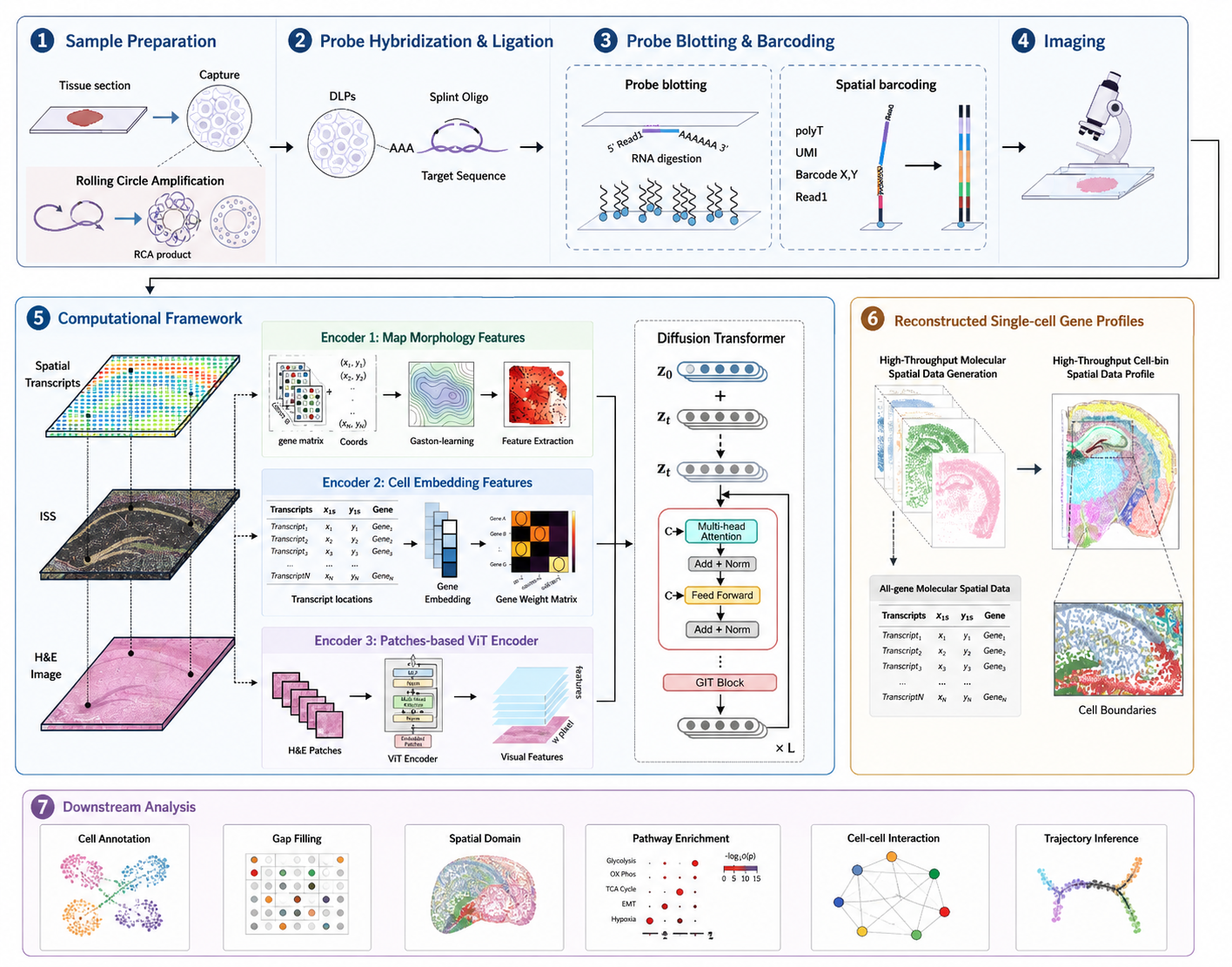
SMART: multimodal fusion-based super-resolution enhancement for spatial omics

Xiamen University · Tan Kah Kee Innovation Laboratory

Question

How can in situ sequencing be enhanced to recover higher-resolution spatial gene expression?

My contribution

Building multimodal fusion methods for high-resolution gene expression mapping and tissue structure delineation.

Status

Ongoing research with Asst. Prof. Mengsha Tong and Prof. Chaoyong Yang.

Key direction

Improved cell-type annotation, spatial heterogeneity discovery, and intercellular communication analysis.

SMART spatial omics project overview
Evidence: multimodal super-resolution spatial omics pipeline.
03

Oct 2024 - Present

Cancer AI

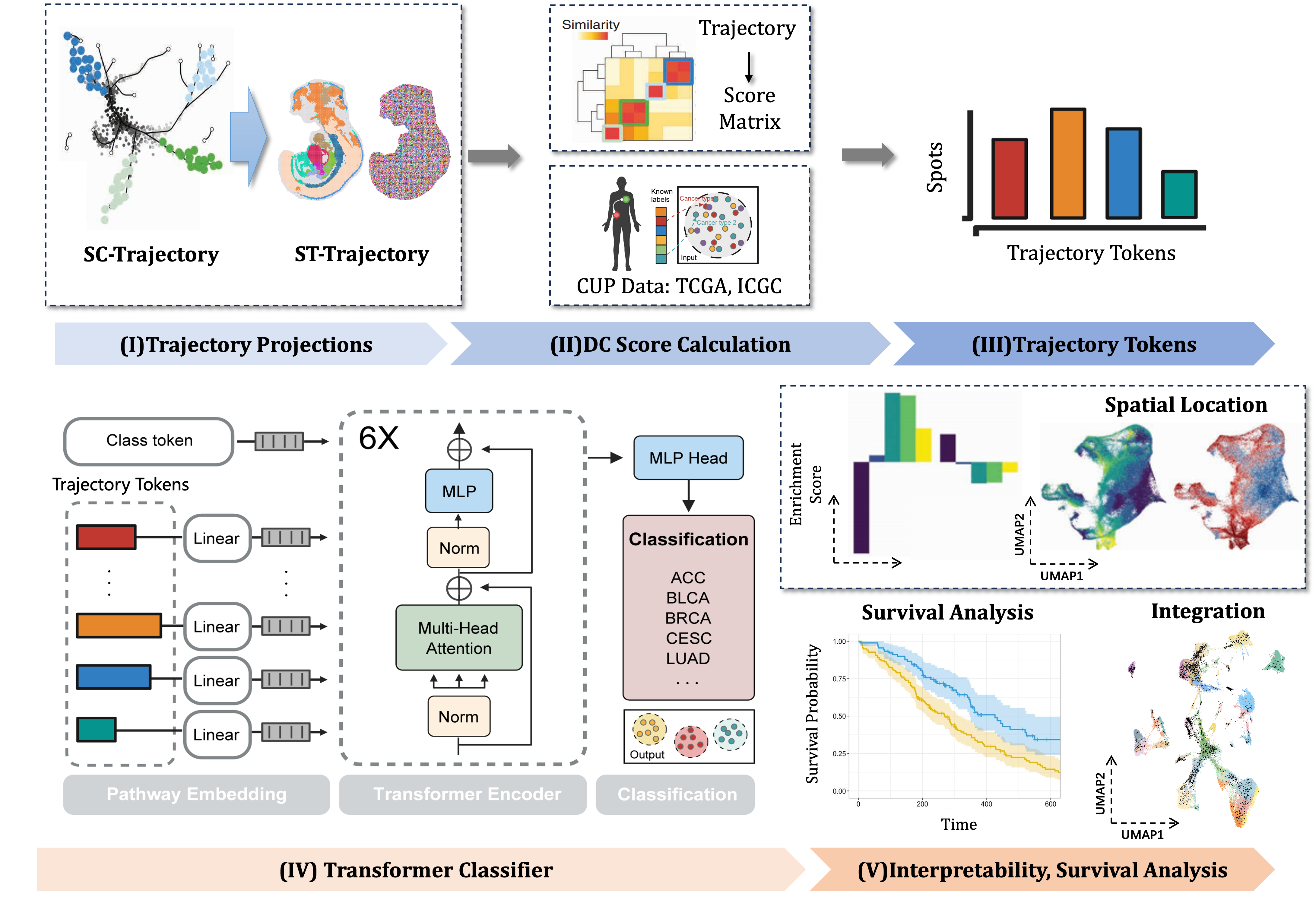
Transformer-based Cancer of Unknown Primary classification and prognosis

Xiamen University · National Institute for Data Science in Health and Medicine

Question

Can multi-omics and pathway-aware deep learning improve CUP classification and prognosis?

My contribution

Collecting and preprocessing TCGA, ICGC, and GEO datasets; training BPformer with pathway-based embeddings.

Status

Ongoing computational modeling with Prof. Mengsha Tong and Prof. Chaoyong Yang.

Key direction

Clinically useful classification and risk stratification for difficult-to-diagnose tumors.

Cancer of unknown primary classification project figure
Evidence: multi-omics classification and prognosis workflow.
04

Aug 2024 - Present

Spatial RNA-seq

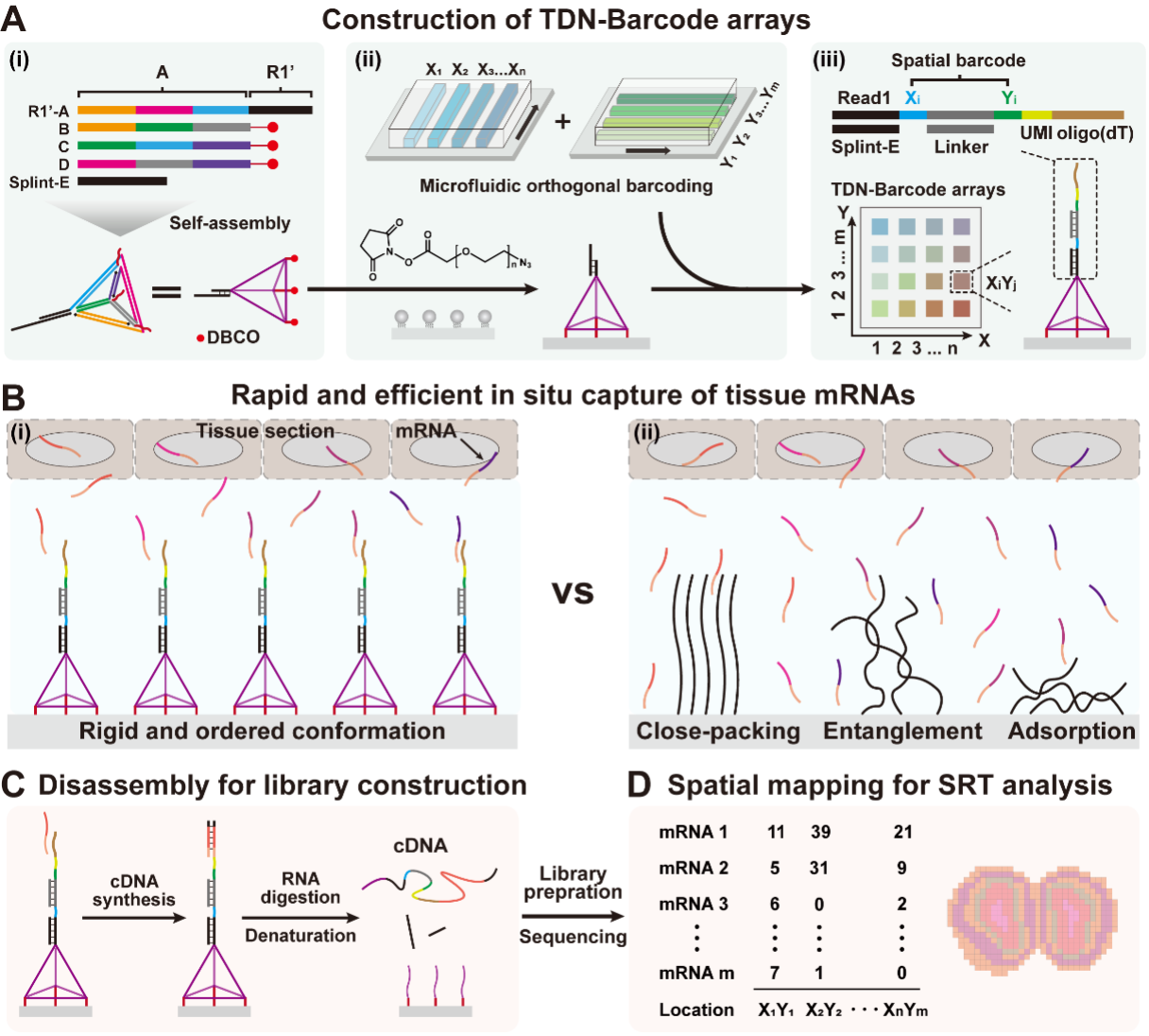
Talent-seq enhances mRNA capture efficiency in spatial RNA sequencing

Shanghai Jiao Tong University · Renji Hospital

Question

Can capture chemistry improve sensitivity and spatial resolution in spatial RNA sequencing?

My contribution

Conducting upstream analysis, saturation calculation, scRNA-seq projection, and benchmarking.

Status

Ongoing research supervised by Prof. Chaoyong Yang.

Key direction

Quantifying improved mRNA capture sensitivity and benchmarking downstream biological resolution.

Talent-seq project figure
Evidence: spatial RNA sequencing sensitivity analysis.